Our story
Hi, I'm Dan. I built this for families like ours.
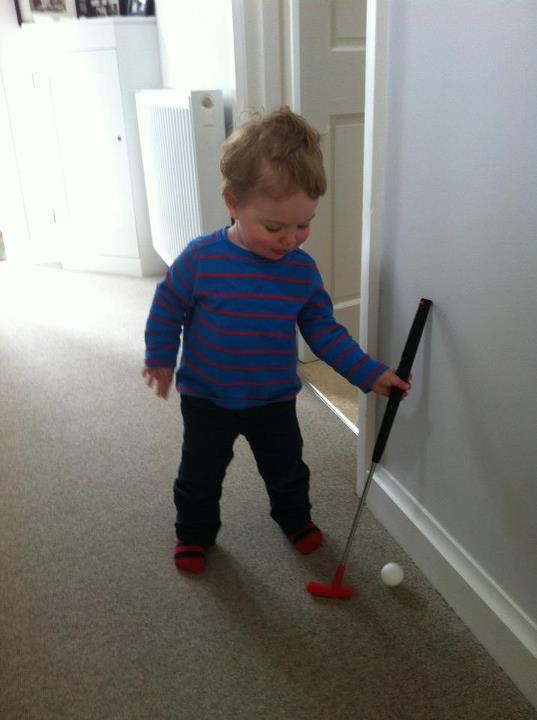 Age 2
The hallway at home. It had to start somewhere.
Age 2
The hallway at home. It had to start somewhere.
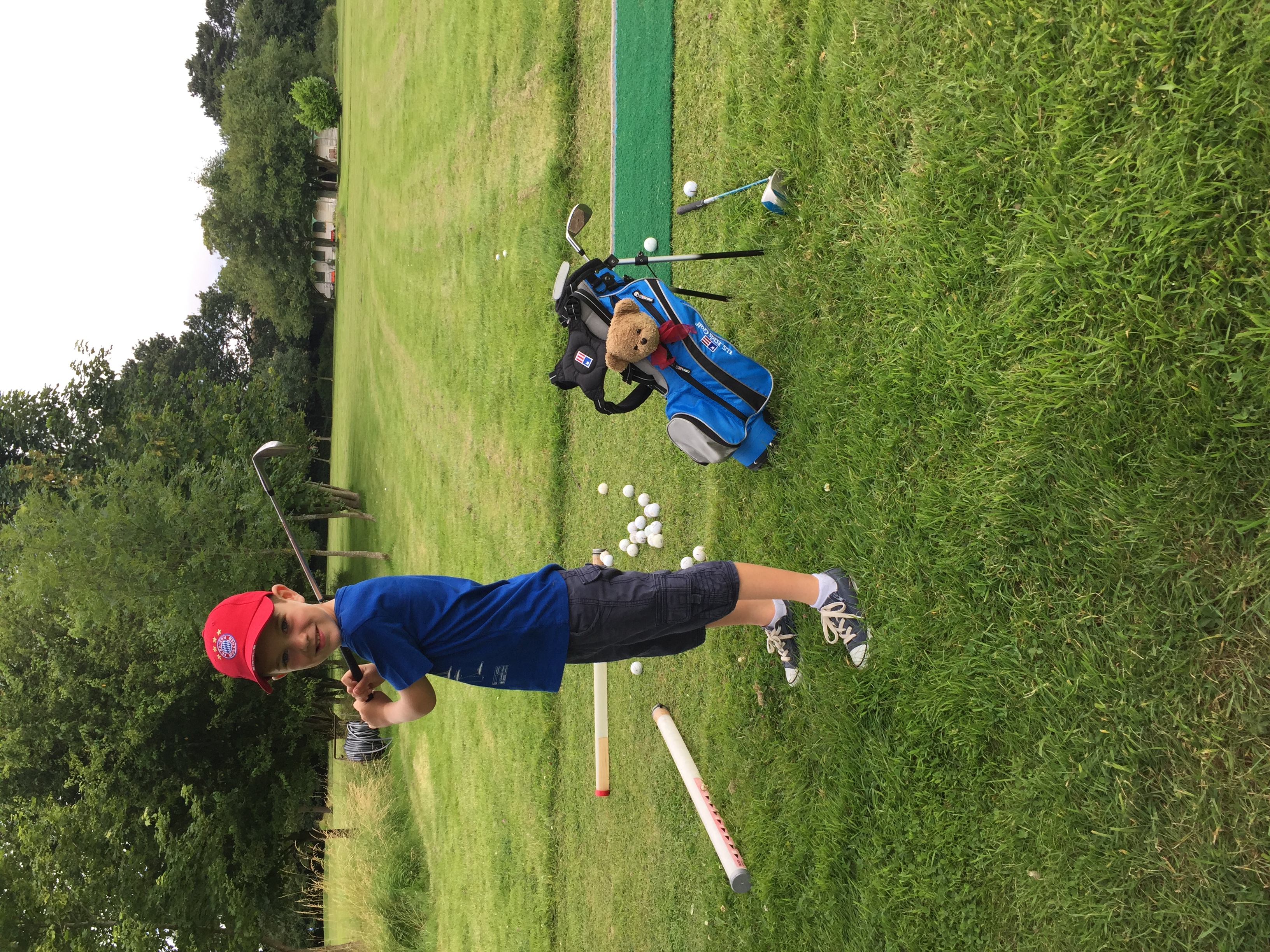 Age 6
First lessons. Letchworth Family Park 3 Course.
Age 6
First lessons. Letchworth Family Park 3 Course.
 Age 14
The Old Course, St Andrews. The golfing trip of a lifetime.
Age 14
The Old Course, St Andrews. The golfing trip of a lifetime.
 Age 15
Letchworth Golf Club. Still loving every round.
Age 15
Letchworth Golf Club. Still loving every round.
I'm a football coach and junior golf organiser at Letchworth Golf Club in Hertfordshire. My son Jacob picked up a golf club at home when he was about two — not on a course, in our hallway, putting a ball against the skirting board. By the time he was six we were on the driving range at Letchworth's Family Park 3 Course, him in a Bayern Munich cap with a teddy bear clipped to his bag.
He's fifteen now. He plays off a low single-figure handicap. He has played the Old Course at St Andrews on a tournament camp. And the friendships he has made through junior golf — the children he met at competitions across Hertfordshire and beyond — are the ones he talks about most.
"I didn't set out to build a platform. I set out to answer the questions every golf parent faces — and realised nobody had put the answers in one place."
Junior golf in the UK has everything it needs. There are outstanding coaches at clubs across the country. There are dedicated county organisers who give enormous amounts of their time for no recognition. There are brilliant competitions — from first junior opens to the county championships — that give children experiences they will never forget. The raw material is extraordinary.
But it is fragmented. Competitions scattered across county websites. Guidance buried in club newsletters. Equipment advice that contradicts itself. No single place where a family arriving in junior golf for the first time can find everything they need.
JuniorCaddie is an attempt to change that — to bring together what already exists and make it accessible to every family, not just those who already know the right people.
Why golf matters more than ever
The antidote to the screen in their pocket.
Think about what a round of junior golf actually asks of a child. They walk up to the first tee, introduce themselves to three people they have never met, and then spend four hours in conversation — outdoors, without an audience, without a feed, without likes. They have to listen. They have to be present. They have to keep going when it goes wrong.
These are not soft skills. They are the foundational capacities of a functioning human being. And they are precisely what the architecture of social media is designed to bypass.
🤝
Real friendshipsBuilt over four hours of shared honesty — not a group chat or a comment thread.
🌿
Four hours outdoorsWalking, talking, thinking. No algorithm deciding what they see next.
⚖️
Character under pressureCalling your own penalties. Congratulating someone beating you. Golf teaches this every round.
The friendships built in junior golf are some of the most enduring in a young person's life. Not because golf is special — but because the format is. Four hours. Walking side by side. Talking about everything and nothing. You cannot fake that kind of connection, and you cannot replicate it on a screen.
The etiquette of golf is not a relic of a more formal era. It is load-bearing. You rake the bunker for the next player. You stand still when someone is playing. You shake hands at the end, whatever the result. A daily practice in consideration for others that most modern experiences simply do not require.
Our commitment
The game is too good to be gatekept.
Junior golf has a cost barrier. Clubs, coaching, competitions, county membership — the investment adds up quickly. And because juniors outgrow their equipment every twelve to eighteen months, the cost never stops. This creates a two-tier junior game. JuniorCaddie exists to help dismantle it.
🗺️
A journey, not a destination
From first swing to county squad — JuniorCaddie supports every stage of your child's development, with guides, competitions and advice that grow with them.
🏌️
Second-hand is smart
Our marketplace keeps quality clubs circulating. A well-maintained second-hand set performs as well as anything new — and costs a fraction of the price.
Browse the marketplace →
🗺️
The map we never had
220+ competitions, guides for every stage, plain English explanations. Everything a family needs — in one place, for the first time.
🤝
Built with the community
Shaped by coaches, county organisers, club juniors secretaries and golf parents. JuniorCaddie belongs to everyone who uses it.
"Junior golf grew our son. Every child deserves the same chance — and the same clear path to get there."
— Dan Lovatt, founder, JuniorCaddie
Find competitions near you →